School Is Back in Session, So It’s Time to Get Involved With Cent$ible Kid$

by Jorge Santiago

It’s never too early to teach your kids the importance of saving their money. But, in fact, many children get to high school lacking the financial acumen necessary to navigate the next chapters in their lives.

Understanding this, The Milford Bank launched the Cent$ible Kid$ program in 2008. We envisioned that the program would help young kids realize the importance of saving their money. To help engrain that message, we visit students in Milford and Stratford elementary schools and show them  how to open a savings account—it’s like a piggy bank, but secure and more measurable.

“We think it’s important to teach kids to regularly save their money for a worthwhile purpose, like something special they want, rather than just asking [their parents] for it,” explains Bob Russo, Vice President and Manager of our Broad Street office. “It’s about choices: They have to decide how to spend their money. We believe it promotes good behavior.”

Whether the students deposit 10 cents or $20 a week doesn’t matter to us. Rather, we’re more interested in encouraging the thrifty behavior. And that’s why we give each child a $1 bonus after making five deposits. After making eight deposits, we give them a $1 gold coin, too.

Right now, there are over 500 kids in the program, according to Russo.

In addition to encouraging the youth to open savings accounts, we also educate them on a variety of bank-related topics including the Federal Deposit Insurance Corporation, the U.S. Mint, interest rates and more.

Since school is back in session, now is the perfect time to teach your kids about the importance of saving their money. We believe that Cent$ible Kid$ is a program that will help do that.
 

School Is Almost Back in Session, So It’s Time to Get Involved With Cent$ible Kid$

By Jorge Santiago

It’s never too early to teach your kids the importance of saving their money. But, in fact, many children get to high school lacking the financial knowledge necessary to navigate the next chapters in their lives.

Understanding this, The Milford Bank launched its Cent$ible Kid$ program in 2008. We envisioned that the program would help young kids realize the importance of saving their money. To help engrain that message, we visit students in Milford and Stratford elementary schools and show themhow to open a savings account—it’s like a piggy bank, but secure and more measurable.

“We think it’s important to teach kids to regularly save their money for a worthwhile purpose, like something special they want, rather than just asking [their parents] for it,” explains Bob Russo, a vice president and manager who works out of our Broad Street office. “It’s about choices: They have to decide how to spend their money. We believe it promotes good behavior.”

Whether the students deposit 10 cents or $20 a week doesn’t matter to us. Rather, we’re more interested in encouraging the thrifty behavior. And that’s why we give each child a $1 bonus after making five deposits. After making eight deposits, we give them a $1 gold coin, too.

Right now, there are over 500 kids in the program, according to Russo.

In addition to encouraging the youth to open savings accounts, we also educate them on a variety of bank-related topics including the Federal Deposit Insurance Corporation, the U.S. Mint, interest rates and more.
Since school is almost back in session, now is the perfect time to teach your kids about the importance of saving their money. We believe that Cent$ible Kid$ is a program that will help do that.

What’s the Difference between a Debit Card, a Credit Card and an ATM Card?

Credit-ATM-Debit-Card

By Pam Reiss

How big is your wallet? It might be quite large due to the amount of plastic it holds.

Believe it or not, 78 percent of Americans carry $50 of cash or less on them at any given time. That’s because these days, virtually anything can be purchased with credit cards or debit cards. Should a consumer find him or herself in a pinch where a business doesn’t accept charge cards, that person could always find the nearest ATM and take out some cash.

But what is the difference between all of those kinds of cards anyway? Let’s take a look:

An ATM card is usually issued by your financial institution. The card allows you to take money from your savings account or checking account from an ATM, depending on which account it’s linked with. Generally speaking, you can use your ATM card to withdraw money from any ATM machine. But be careful: Some of those withdrawals will cost you. If an ATM machine is not part of your bank’s network, there’s a good chance you’re going to have to pay a fee to access your money. Because The Milford Bank is a member of the Allpoint ATM Network, our customers are able to withdraw money from one of 55,000 machines across the world with no fees. You can find more information about that here.

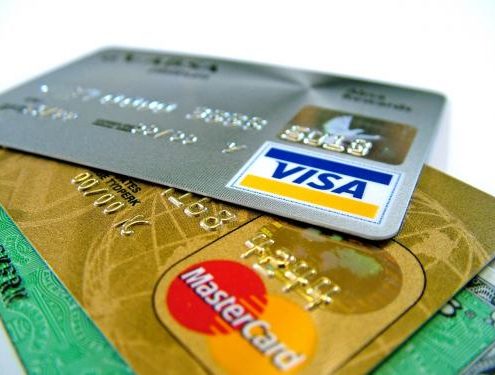
• A debit card—also known as a check card—is linked with your checking account and generally has a Visa or MasterCard logo on it. As such, you can use these kinds of cards anywhere credit cards are accepted. It’s important you realize that debit cards are not credit cards, as the money that they draw from is the money that is on deposit in your bank account. Because you’re using your own money to make purchases you don’t have to pay interest on the things you buy with your debit card. But it’s important that you remember to keep track of how much money you have in your account because it is possible to spend more money than you have in your accounts, causing you to overdraw your account. .

• A credit card allows you to purchase things with a lender—like American Express, Visa or MasterCard—fronting you the money. The lender charges the merchant a per-dollar percentage on each transaction. They will also charge you interest if you carry a balance on your account. . Depending on your credit history, your credit limit may vary. The better your history, generally speaking, the higher your limit.

Different kinds of cards are the preferred method of payment for different kinds of people. There are some people who will only buy things with cash. When you pay with cash, you know exactly how much of it you have in your wallet so you don’t risk spending more than you have.

Other people turn to debit cards because they don’t like having cash on their person in case they lose their wallet, for example. On top of that, you don’t have to worry about carrying a high balance—though you might have to worry about overdrawing your account if you’re not careful.

Because of the freedom and rewards that come with some credit cards, many people feel comfortable buying with them. It is important to try and pay your credit card balance in full each month, however, if you wish to avoid hefty interest rates.

What is your favorite banking card to use and why? Keep the conversation going in the comments section below!

What is the difference between the mortgage rate and APR?

By Paul Mulligan

You are eyeing a 15-year fixed mortgage rate of 3.125 percent. But next to the mortgage rate there is another number that says 3.17 percent annual percentage rate (APR).

So what’s the difference between the two numbers, and how does it affect you?

Your mortgage rate is the baseline interest that you can expect to pay every month if you qualify for the loan. Mortgage rates are offered in increments of eighths (for instance, a sequence would go 3 percent, 3.125 percent, 3.25 percent, 3.375 percent, etc.).

This number can vary depending on several different factors including the health of the housing market and your risk as a borrower. Your risk can include the amount of the loan you are requesting, your credit score, the purpose of the loan and the property type. Other factors could include whether the loan is full, limited or stated, as well as the loan-to-value ratio.

Your APR is what you will actually pay once you factor in all of your third-party and closing fees like loan origination fees, processing fees, underwriting and premiums. It could also contain mortgage “points,” which are percentages of the loan that the bank can request. Different rates will come with different points that you as a borrower could have to pay.

All of these fees are typically bundled into a single APR. Banks are required to disclose the APR on their loans so that consumers can compare apples to apples.
So what can you do to secure the best mortgage possible?

Finding the best mortgage rate could mean saving thousands of dollars in the long run. A good place to start is to look at your bank’s standard mortgage rates to get an idea of what to expect prior to scheduling a meeting. Also, spend some time comparing mortgage lender rates, which will let you find the best deals in the region where you are looking.

Still have questions about mortgage rates and terms? Ask us. We are here to help.

How to turn your hobby into a home business

By Bob Russo

If you had all the money in the world, what would you choose to do for work?

That’s the question we’re supposed to ask ourselves to identify what we’d prefer to do for a living. Maybe your response to that question indicates that you’d like to become a photographer, for example, or that you’d like to make jewelry. Identifying your dream job is surely encouraged; there’s a good chance, however, that you’re not quite ready to quit your job and pursue your hobby full time. Perhaps because you cannot afford to do so.

But there’s no reason why you shouldn’t at least consider whether the possibility exists that you could make money by turning your hobby into a home business. Sure, you can’t expect that such a business would take off overnight. But who knows? Maybe after a few years, you’ll actually be able to quit your proverbial day job and focus your efforts on making a living while doing something you love.

Before you make a decision, you must ask yourself an important question: Are people willing to pay for what I make?

Prior to launching a home business, you have to be sure that there’s a market for the items you make or the services you offer. Ask your friends how much they’d pay for an item you made, for example. If you are comfortable with their responses, it’s time to ask a stranger how much he or she would pay. Satisfied with that answer? It might be time to begin looking into starting a business on the side.

In order to establish your business, you need to be able to prove that you’re trying to make a profit. If you lose money year-after-year and aren’t turning a profit, the IRS could very well view your business as a hobby, and may limit your deductions as a result (consult your tax advisor for specific information).

Here are some tips to help establish your profit motive:

• Create a business plan that clearly defines the fact that you are indeed trying to make money.
• Run your business like a business. That is, keep records of all your expenses and all of your sales.
• Make decisions to increase profits. After all, the goal of a business is to make money, so make sure your actions work toward that goal.

Turning your hobby into a business might be a fun way for you to bring in some extra cash. After that, who knows? The sky could very well be the limit.

How do I calculate my net worth?

by Patty Gallagher

Do you know how much money you would amass if you paid off all of your debts and sold all of your assets?

That number is referred to as your net worth. While we would all like our net worth numbers to be near those of Warren Buffet ($65.1 billion) and Bill Gates ($79.1 billion), the truth is there is no “magic” number we for which we should strive. Rather, we should aim for a year-over-year improvement upon that number.

Believe it or not, calculating your net worth is relatively easy. Here’s how you can do it:

  1. You will first want to put together a list of all of your assets. This will include things like your checking and savings account balances, the value of your stocks and bond holdings, any property you might own and expensive items like cars, jewelry, boats and valuable art. You can include whatever else you want into that mix, but for all intents and purposes, that list should likely suffice. (In other words, you might not want to include your DVD collection or that old guitar into this calculation.)
  2. Now it is time to figure out how many liabilities you have. Liabilities include any debts you have incurred such as: student loans, mortgages, credit card balances and car loans. Gather all of those numbers in one place and add them up.
  3. Now it’s time to subtract your liabilities from your assets. That difference is your net worth. No matter what the number is—positive, negative or zero—you should simply focus on improving it every year.

Be aware, that it’s not that uncommon to have zero net worth , as some estimates indicate as many as half of the country has zero net worth, meaning their assets equal their debts.

You might even have a negative net worth. After all, you might have just bought a new house and have a large mortgage or may have just graduated college or graduate school and are still carrying hefty student loans. Neither of those scenarios are necessarily bad things. The good news is that improving your net worth doable. Every time you chisel away at your liabilities, your net worth goes up. Similarly, every time you pad your assets, your net worth increases.

Facts About Current American Net Worth

Every quarter, the Federal Reserve calculates the net worth of American households. Most recently, the banking institution pegged that number at $81.764 trillion—the highest it’s ever been. Following the first quarter of 2009, collective American net worth stood at $55.71 trillion, meaning the number has increased by almost 50 percent in just five short years.

There are roughly 115 million households in the United States, which means that on a per household basis, Americans have $301,000 in assets and are free and clear of debt, according to CNN. Of course, those at the top of the proverbial financial food chain skew those numbers. In fact, America’s median net worth is $45,000. So while the country ranks fourth in the world in terms of average net worth, it ranks 19th in the world in terms of median net worth.

Hidden Ways to Save Money Each Month

By Lynda Mason

Today’s difficult economic climate has affected many individual’s finances. And it certainly doesn’t help that the prices of everything—from gasoline (did you know gas costs consumers 5 percent more this year than last year at this time?!) to electricity to food—seem to be increasing.

At The Milford Bank, we understand the realities inherent in today’s economy. We also value each and every one of our customers and want nothing more than to see all of their savings accounts grow every month.

While we might not be able to control your rising expenses, we can offer some advice as to how you can save more money. In this ongoing series, we’ll highlight a few tips that we hope will help:

  • Shop your car insurance. We’ve all heard the commercials, but how many of us actually shop car insurance? The truth of the matter is that, with the chaos and rush of day-to-day life, we’d rather let our policies automatically renew simply because it’s easier. But there are so many insurance companies out there, and they all want your business. Who knows how much money you stand to save annually by switching insurers?
  • Consider who produces your electricity. More than a decade ago, Connecticut deregulated the electricity market, allowing small energy producers to send their electricity over infrastructure owned by the utility companies. Did you know that you’re able to shop around and choose who produces the electricity that powers your home? You may be able to find cheaper rates and switch providers at no cost. Be careful, however, to understand how long the less expensive rate applies, the frequency and amount of any rate increase and how long you are committed to buy from a new energy producer.
  • Cook more meals. Sure, going out is fun. It’s nice not to have to cook, and perhaps even more so not to have to clean. But let’s say you spend $50 every time you go out to dinner, and you go out twice a week—that adds up to a hefty $5,200 a year. You can certainly reduce that expense by cooking more meals at home. And there’s a good chance it will be healthier for you, too.

Hidden Ways to Save Money Each Month

By Lynn Viesti Berube

Today’s difficult economic climate has affected many individual’s finances. And it certainly doesn’t help that the prices of everything—from gasoline (did you know gas costs consumers 5 percent more this year than last year at this time?!) to electricity to food—seem to be increasing.

At The Milford Bank, we understand harsh realities inherent in today’s economy. We also value each and every one of our customers and want nothing more than to see all of their savings accounts grow every month.
While we might not be able to control your rising expenses, we can offer some advice as to how you can save more money. In this ongoing series, we’ll highlight a few tips that we hope will help:

• Shop your car insurance. We’ve all heard the commercials, but how many of us actually shop car insurance? The truth of the matter is that, with the chaos and rush of day-to-day life, we’d rather let our policies automatically renew simply because it’s easier. But there are so many insurance companies out there, and they all want your business. Who knows how much money you stand to save annually by switching insurers?

• Consider who produces your electricity. More than a decade ago, Connecticut deregulated the electricity market, allowing small energy producers to send their electricity over infrastructure owned by the utility companies. Did you know that you’re able to shop around and choose who produces the electricity that powers your home? It’s likely that you can find cheaper rates and switch providers at no cost.

• Cook more meals. Sure, going out is fun. It’s nice not to have to cook, and perhaps even more so not to have to clean. But let’s say you spend $50 every time you go out to dinner, and you go out twice a week—that adds up to a hefty $5,200 a year. You can certainly reduce that expense by cooking more meals at home. And there’s a good chance it will be healthier for you, too.

What Do You Know about Defunct U.S. Currencies?

By Pam Reiss

Today, for the most part, we exchange bills that bear the visages of George Washington, Abraham Lincoln, Alexander Hamilton, Andrew Jackson, Ulysses S. Grant and Benjamin Franklin during financial transactions. Occasionally, you might also stumble upon a $2 bill adorned by Thomas Jefferson.
But did you know that the United States also had five larger currencies in circulation years ago? Though President Richard Nixon discontinued them in 1969—so as to discourage large scale black market transactions from occurring—they’re still legal tender. But because they’ve become collector’s items, it’s likely whoever has their hands on them won’t be letting go anytime soon.
Let’s briefly explore these five bills:
• The $500 bill had a few iterations, with Chief Justice John Marshall depicted on the 1918 version and a scene of Hernando de Soto’s 1541 discovery of the Mississippi River on the back. In 1928 and 1934, the bill was updated to feature President William McKinley, who was assassinated in 1901.

• There were also two modern versions of the $1,000 bill that were circulated (other iterations were introduced in the 1800s). The first one was featured Hamilton on the front and a bald eagle on the back and was released in 1918. In 1934, President Grover Cleveland adorned the bill.

• America’s fourth president, James Madison, is featured on the $5,000 bill, which was printed in 1918 and 1934. The first printing’s backside featured a scene of Washington’s resignation.

• You might be surprised to that the $10,000 bill—the largest bill ever in public circulation—features a not-as-popularly-known figure in U.S. history, Salmon P. Chase, who was a senator, governor, treasury secretary and Chief Justice of the Supreme Court. The 1918 version of the bill’s backside featured a Pilgrim-related scene.

• The largest bill ever printed by the treasury was the $100,000 bill, a gold certificate featuring President Woodrow Wilson. The bills, which were only printed for three weeks, were used to facilitate large transactions between different Federal Reserve branches.